Alaska Summer 2015
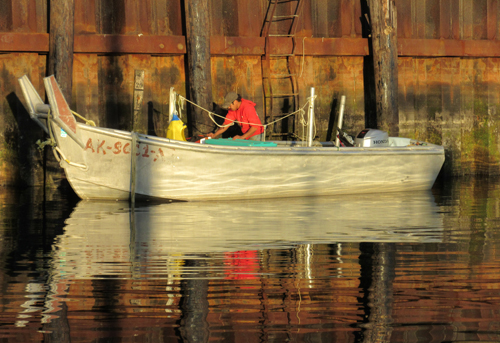
Alaska, like the rest of the West, has been experiencing a drought in recent years. One does not normally put Alaska and drought in the same sentence. With this in mind, the cruise this summer focused on the effects of current changes in weather patterns.
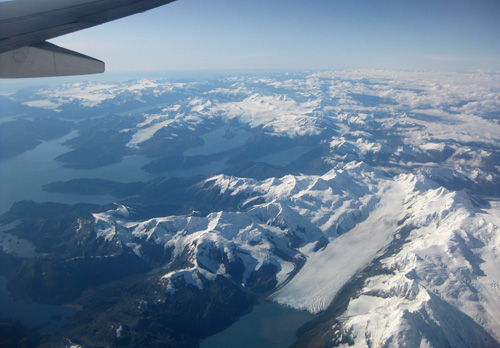
One of the obvious signs this season was the decrease in snow pack. Normally by mid-May the snow level is fairly close to the shoreline and in some cases still very heavy. Last year, and even more so this year, the snow level mid-May was more like what one would expect in August. The town of Valdez, not far from Cordova, recorded six feet less snowfall than the previous record low. The city of Anchorage, Alaska's largest, experienced the least snowfall since records have been kept. By the time Mark arrived in Cordova in March to begin his late winter solo cruise, the snow line was 800 to 1,000 feet above sea level.
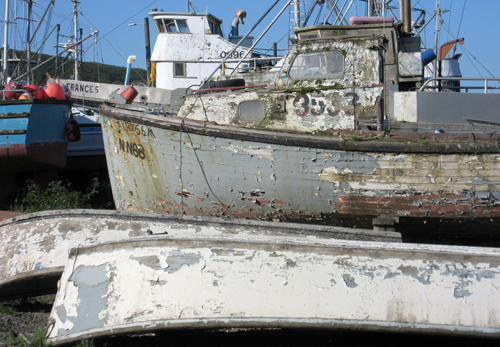
Most towns in Alaska, like many in Washington State, depend on steady melt of snow pack and lakes for their water supply, not enormous dams. Last year the seafood processing plant in King Cove on the Alaska Peninsula, the largest such facility in the world as measured by product output, was forced to curtail production due to insufficient water. The town of Cordova relies on snow melt to drive the hydro-electric power plant, and this year’s insufficient water flow would force consumption of expensive diesel fuel throughout the summer fish processing season, the largest such production in history.
Alaska forest fires have been occurring earlier and over a longer season the last couple of years. Fires in the interior of Alaska are especially destructive in that they burn the protective tundra layer over the permafrost, causing melting and the release of methane gases into the atmosphere. By early August, more acres had been consumed by fire than any previous season but one. It was expected that the previous record would be broken by the end of summer.
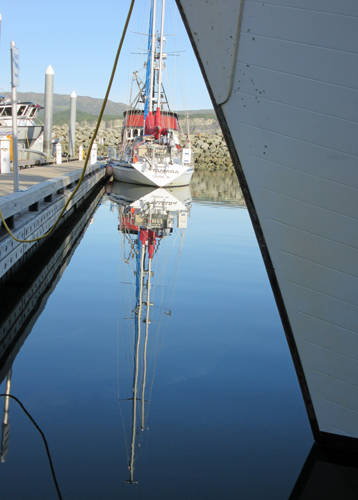
Sea water temperature is critical to salmon spawning and a rise of only a few degrees can bring havoc to the fisheries. Another effect of warmer temperatures can be an unusually high rate of growth of toxic phytoplankton. The death of an unusual number of sea birds in the Aleutians, as well as ten fin whales found dead off Kodiak Island, was provisionally attributed to this phenomenon.
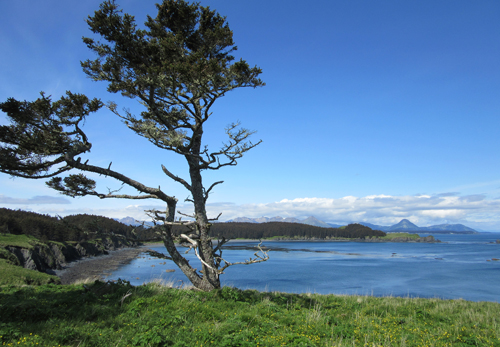
We were fortunate, however, to note an extraordinary abundance of Humpbacks this season, particularly near the Kodiak and Shumagin Islands. On several occasions one or more whales breached completely clear of the water very close to TAMARA. Unfortunately, none ever gave adequate warning for Nancy to be able to aim and focus her camera. She's still hoping for that great whale shot!
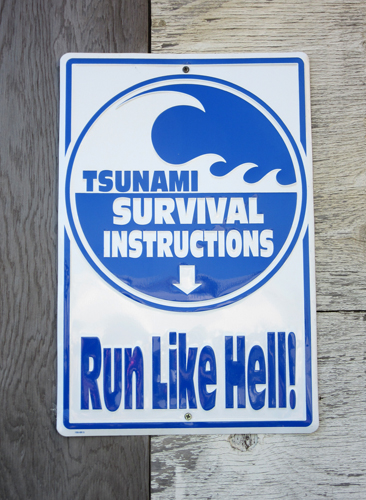
Having made the cruise to the west several times before, we would be breaking little new ground. Instead we planned to revisit several of our favorite anchorages in the southwest part of Prince William Sound, the Kenai Peninsula, the Kodiak archipelago, the rugged Alaskan Peninsula, the Shumagin and Konuij Islands. However, this season we ventured a bit off the track on this route to visit the small but important fishing of Chignik on the Alaskan Peninsula.
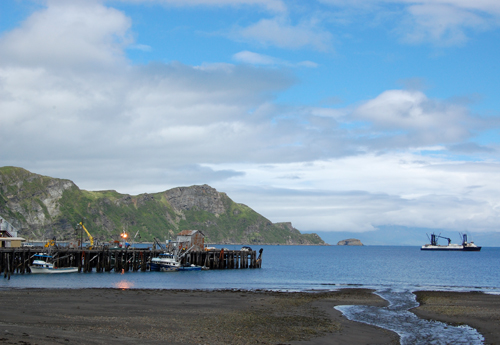
Chignik, the Aleutik word for “Big Wind” is sited at the approaches to a large, but very shallow, lagoon that produces a important Red Salmon run. The village’s name was exceptionally well chosen, and during much of our time in the brand new, well constructed harbor the place lived up to its windy reputation.
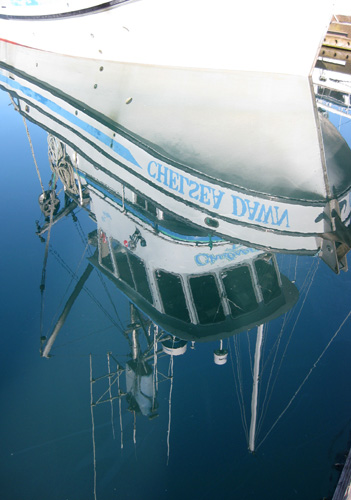
The salmon seine fishing boats that work the Chignik red salmon fishery are generally of very shallow draft, permitting them to work in the lagoon when necessary.
On our return to Cordova, TAMARA’s home-port, we were pleased to see secured to the transient dock a boat and crew we’d come to know in Patagonia and Antarctica. SAUVAGE, with Sophie and Didier aboard, was soon to depart for Mexico. But we were able to spend a few days together, and extensive discussions involving their decision whether to rebuild or replace their main engine hopefully allowed Sophie and Didier to come to a good resolution! Their latest phone call, from Ketchikan, had them planning to make their best time to Bellingham, WA to take possession of a new engine, which given the extraordinary distances they cover each season will see extensive use.
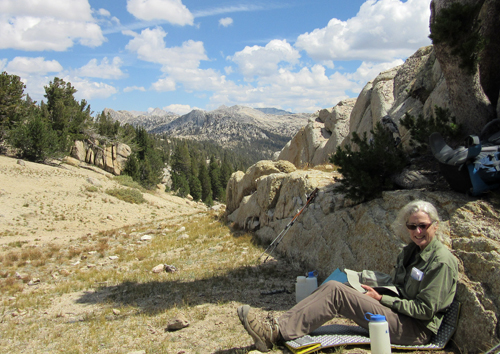
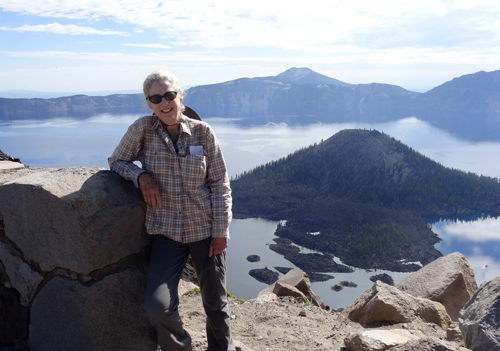
Nancy departed in mid-August to continue her hike of the Pacific Crest Trail. She would hike from Tuolumne Meadows to Donner Pass, making her total completed miles more than half way. The main concern on this hike was the fire danger but the only sign of fire was a day or two of very light smoke which she felt was very fortunate. Mark made yet another drive home, having now completed the spectacular 2,250 mile drive from Alaska through the Yukon and British Columbia more than two dozen times. For him, it's the best way to make the transition back to the bustle of life in the Puget Sound region.
Labels: Alaska Peninsula, Chignik, Kodiak, Port Wrangell, Prince William Sound, Shumigan Island Group
posted by Editor at 2:22 PM
0 comments


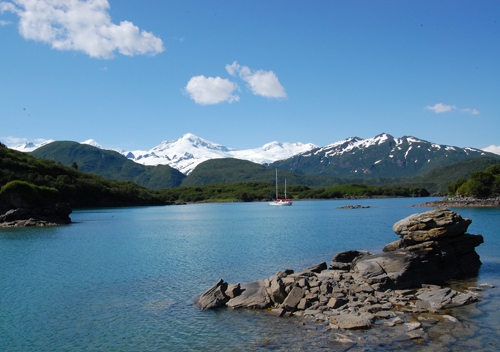 Our Alaska cruising season now officially starts in March. This is the third year that Mark has arrived in Cordova in March to do a late winter, early spring cruise in Prince William Sound on his own.
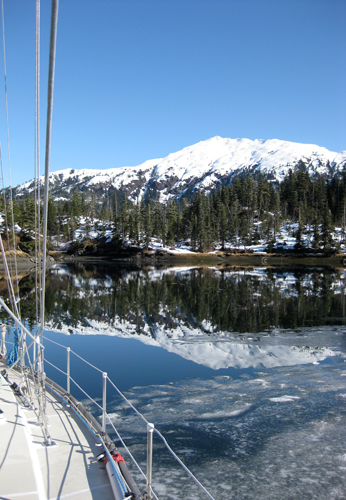 During Mark’s late winter cruise, the contrast to his first March cruise two years ago was striking. In 2012 Prince William Sound had experienced record snowfall. Snow lay heavy not only in the high mountains, but all the way down to the high tide line. This season, very little snow cover - by comparison at least, as snowfall is a hallmark of the sound - presaged what would prove to be a summer season in which water was in short supply in Cordova and require the town to impose use restrictions.
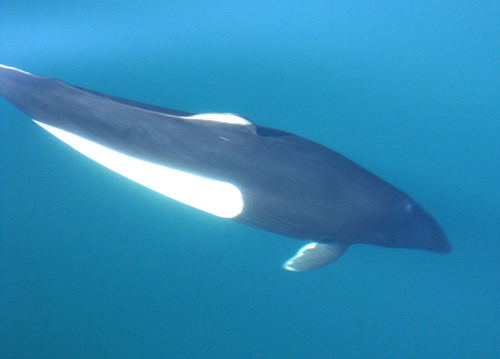 Less snowfall, occasioned by high barometric pressure and clear skies, was accompanied by colder temperatures every night, freezing over the anchorages almost daily. Of course the same clear skies brought warming sunshine each day that softened the ice in the afternoon, permitting rowing and shore excursions before the nightly cold froze everything over once again.
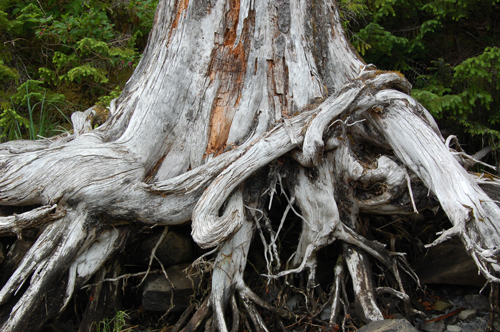 Meanwhile in April, Nancy was completing another section of the Pacific Crest Trail in Southern California (
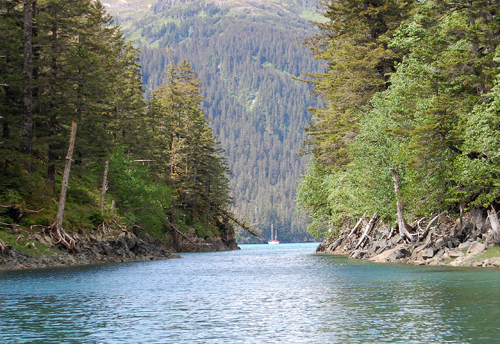 Most of Alaska had experienced a very dry winter this season, and where in previous Mays the snowline was just off the shore, this spring the snowline was above 1,000 ft. Normally the ground would be very wet and squishy and all the small ponds overflowing, but this year the ground was very dry and many small ponds already shrinking. As a consequence wildfires were already raging on the Kenai Peninsula.
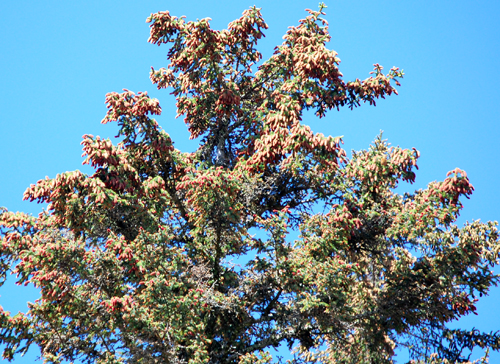
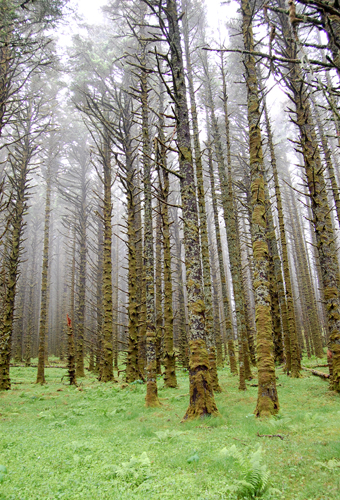
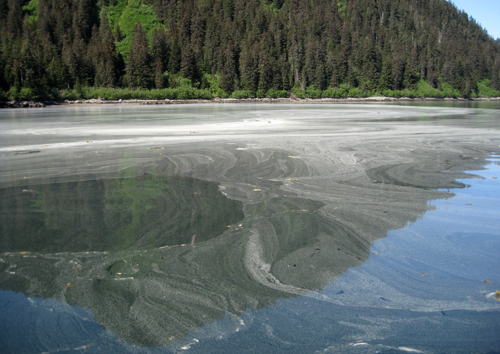 Another result of the mild winter was the abundance of pollen from the Sitka spruce which coated the anchorages, leaving bathtub rings along the shoreline. This is the northern edge of the Pacific Northwest Rain forest, and after a mild winter the trees exploded in the spring with pollen and their limbs heavily laden with cones. Several times dust devil whirlwinds of pollen streaked through the trees.
.jpg)
 We usually don’t meet many boats, especially foreign, in May, but in Sheep Bay, our first anchorage, were Claudia and Jurjen from Austria on their boat s/v La Belle Epoque. They had come through the NW Passage last summer and wintered in Kachemak Bay, then Cordova. They had been in Prince William Sound for a month and were getting ready to begin the passage south through Southeast Alaska’s Inside Passage.
While in the Tonsina Bay anchorage in Nuka Bay on the Kenai Peninsula we met Riitta & Pekka from Finland on s/v Sarema. It was the first boat we have met to have transited both the North West and North East Passages. The NE Passage, as expected, was more difficult than the NW Passage due to it’s length and short season to complete the passage. In both cases the race to get through make either passage more a marathon than a voyage.
We had met Kate, Hamish, and their daughters Helen and Anna on s/y Seal, US flagged, in Mar del Plata, Argentina, then later in Ushuasia and Puerto Williams, Chile. They were operating a charter service in South Georgia and Antarctica, but recently moved to Alaska, with a new home base in Cordova. Mark has been recommending anchorages we’ve enjoyed on the Alaska Peninsula and Shumigan Islands, as well as Prince William Sound. So it wasn’t surprising that we encountered them on the Kenai Peninsula, Afognak and Kodiak this season.
We usually don’t meet many boats, especially foreign, in May, but in Sheep Bay, our first anchorage, were Claudia and Jurjen from Austria on their boat s/v La Belle Epoque. They had come through the NW Passage last summer and wintered in Kachemak Bay, then Cordova. They had been in Prince William Sound for a month and were getting ready to begin the passage south through Southeast Alaska’s Inside Passage.
While in the Tonsina Bay anchorage in Nuka Bay on the Kenai Peninsula we met Riitta & Pekka from Finland on s/v Sarema. It was the first boat we have met to have transited both the North West and North East Passages. The NE Passage, as expected, was more difficult than the NW Passage due to it’s length and short season to complete the passage. In both cases the race to get through make either passage more a marathon than a voyage.
We had met Kate, Hamish, and their daughters Helen and Anna on s/y Seal, US flagged, in Mar del Plata, Argentina, then later in Ushuasia and Puerto Williams, Chile. They were operating a charter service in South Georgia and Antarctica, but recently moved to Alaska, with a new home base in Cordova. Mark has been recommending anchorages we’ve enjoyed on the Alaska Peninsula and Shumigan Islands, as well as Prince William Sound. So it wasn’t surprising that we encountered them on the Kenai Peninsula, Afognak and Kodiak this season.
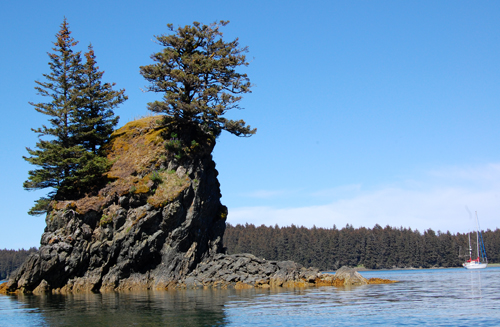 Shuyak Island State Park was an area of the Kodiak archipelago that we had not yet explored, hence high on this season’s list. It encompasses the northeastern most end of the Kodiak Island group and, unlike the rest of Kodiak, has a low profile, 508 ft being the highest point. The Park has four public use cabins, approximately 12 miles of trails and as is the case in most of Alaska, is only accessed by boat or float plane. We encountered two French boats who had arrived recently from Hawaii, slowly making their way to Puget Sound. It’s a very tranquil setting but a little too tame for our tastes.
 While waiting for suitable weather to cross over to the Alaska Peninsula we spent a few days in Blue Fox Bay, on the NE end of Afognak Island, part of the Kodiak National Wildlife Refuge. To our surprise s/y Seal arrived and we enjoyed a couple of sunny days exploring the area again in the company of friends.
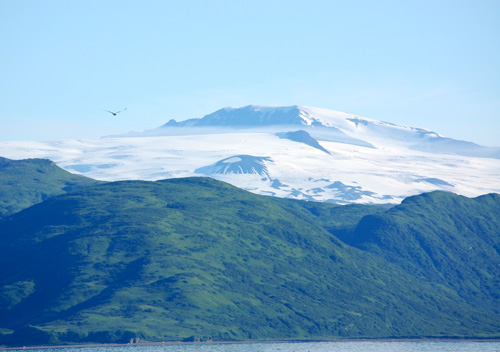
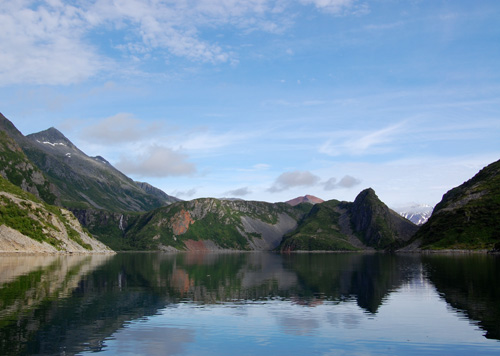
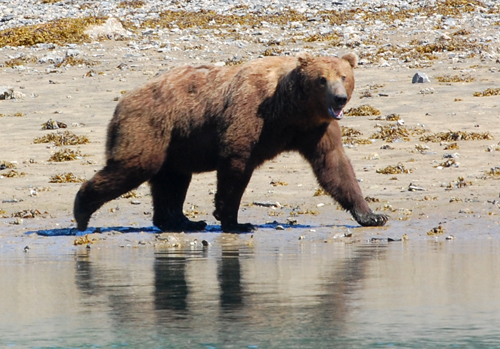
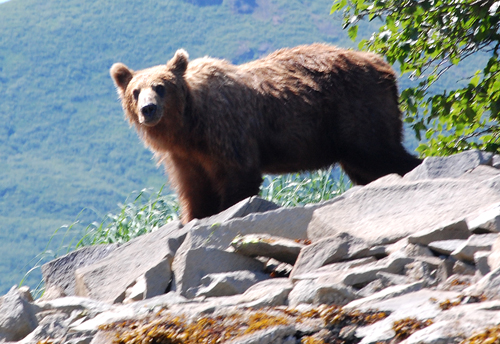
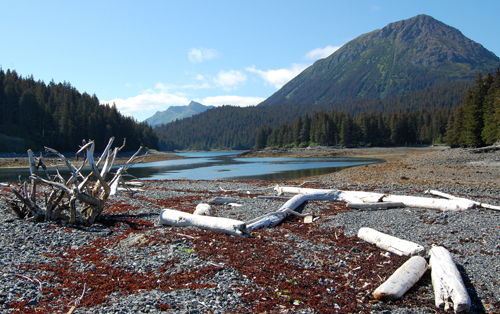 The main destination of this season’s voyage was Kukak Bay within Katmai National Park on the Alaska Peninsula. Unlike the very popular Geographic Harbor, 30 miles southwest along the peninsula, Kukak Bay offers great views of the volcanic mountains of the Aleutian Range and more options for anchoring. One of it’s main attractions is close-in access to Brown Bears and Nancy was determined to get some photos. Katmai Wilderness Lodge is located at the mouth of the Bay and every day their small boats do a full circumnavigation of the Bay looking for bears and other wildlife.
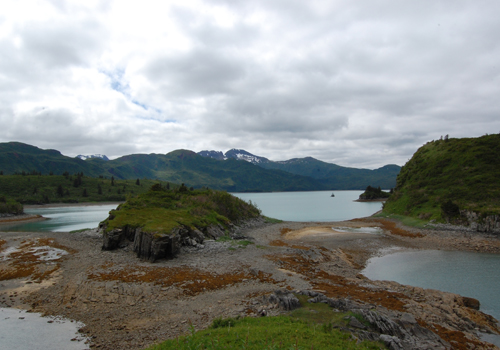
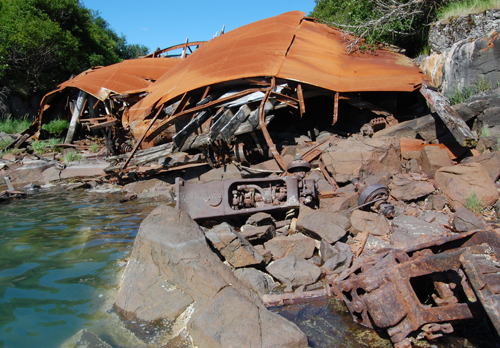 There are two very large river deltas emptying into the head of the bay, but for us they are too far from the anchorage for us transit in our small dinghy. Instead we spent time by an old cannery site and inside a small lagoon, deep enough for us to get inside. Dinghy exploration was easier and on several occasions we came upon bears very close but safe enough to get some photos. And it didn’t hurt that we had great weather the whole time we were there.
 Following our years spent cruising distant high-latitude grounds, numerous cruisers whom we have met or others that they refer contact us with requests for information about the coastal regions of Alaska beyond that covered in the few cruising guides. Mark had been in email contact this winter with two cruising boats coming to Alaska for the first time requesting information on anchorages, availability of fuel, general cruising information, etc. It worked out that while we were in Kodiak refueling and re-supply that both boats came into the harbor. Pete and Raewyn, Kiwis, onboard s/y Saliander took every anchorage suggestion Mark recommended and then some. Their approach is to leave no stone unturned and have some great stories to tell of their adventures. So many cruising boats, due to time restraints and distances involved, miss a lot of what Alaska has to offer - but not Saliander. John, on s/y Active Transport, shares with Mark, an interest in local maritime history.
 Prior to making the Gulf crossing back into Prince William Sound we spent a few days on Long Island, near Kodiak city, where we once again met up with Seal. Nancy needed to get in some walking in an attempt to get ready for her upcoming hike, and Long Island offers lots of trails and no threat of bears.
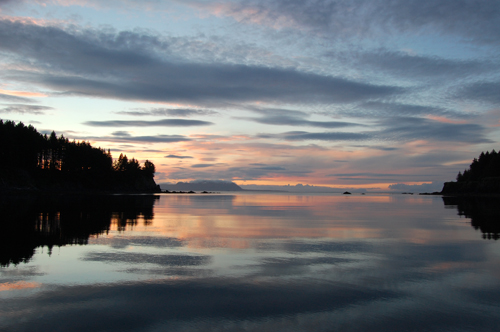 Two weeks were spent cruising in Prince William Sound revisiting tried and true anchorages and exploring a few new ones. The weather overall was cooperative enabling us to get in some hiking and kayaking before returning to Cordova. Back in town and Nancy’s focus is on her upcoming Sierra hike, 240 miles, her most challenging section. She leaves on August 5th. Good Luck!
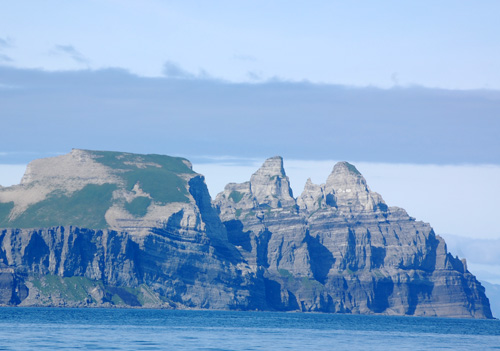
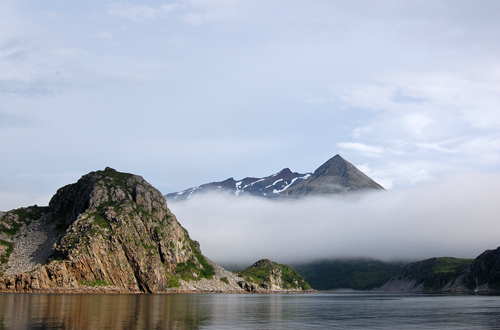 The Outer Shumigan Islands had intrigued us each time we looked at a chart of the area. Unlike Nagai Island, the Konuiji Islands are rarely visited by local fishermen or yachts transiting the Alaska Peninsula. Since we now had extra time we could wait for fair weather and explore the area.
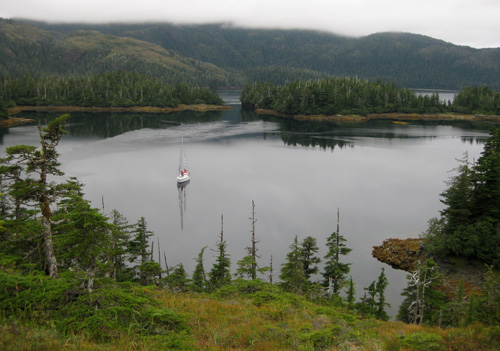
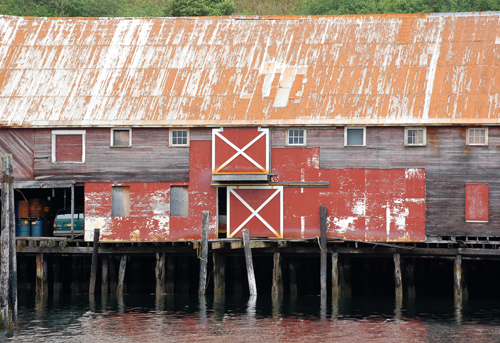 From Dora Harbor, on the tempestuous Pacific side of Unimak Island, we made stops in the settlements of King Cove and Sandpoint. It was tempting to stay in Sandpoint for their 4th of July celebration but with a good weather window we opted instead to head to The Kitchen, an anchorage on Nagai Island that Mark had spent considerable time in 1982 while doing a fisheries research project. The anchorage is behind a shingle spit, requiring careful navigation upon entry, and well protected from all winds except the occasional katabatic winds off the mountains. A series of westerly winds were passing through and after a pleasant week in the very sheltered Kitchen, kayaking, rowing or hiking on the spit, we were able to proceed to the Outer Shumigans.
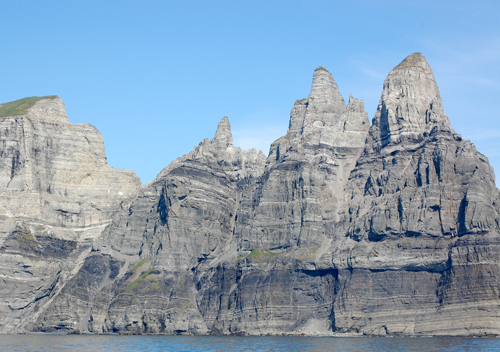
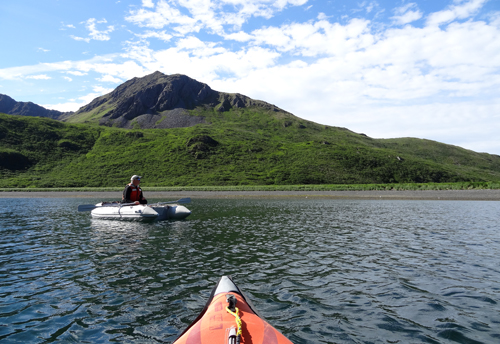 Our intended first anchorage was to be Simeonof Harbor on the island of the same name, but once we arrived, it was apparent that it was too shallow for Tamara and the winds were not favorable. There was still plenty of daylight, so we passed through Twelve Fathom Strait to Little Koniuji Island, an anchored in Sandy Harbor, a fine anchorage with a white sand beach, a rarity in Alaska. These islands are predominantly granitic rocks, and when broken down by millennia of weathering form great sand beaches. In some areas, enormous dunes with lush tall grass atop holding the whole mass together make wonderful hiking ashore, though pushing through the grass requires some effort.
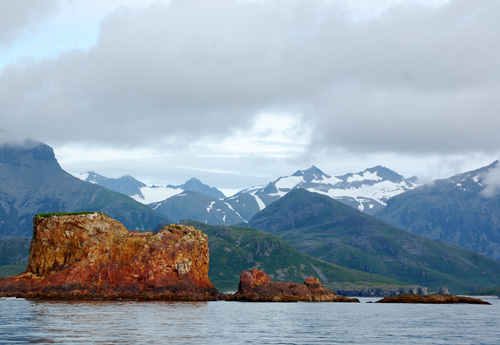
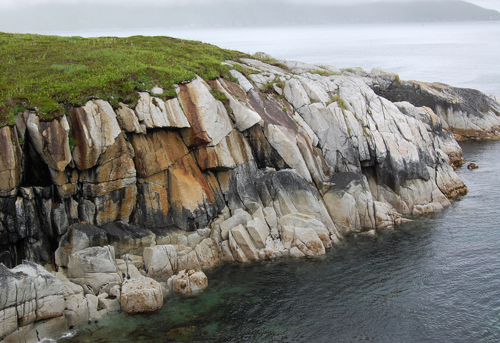 Nancy spent time kayaking to the beautiful sandy beach at the head of the bay and exploring the rock formations.
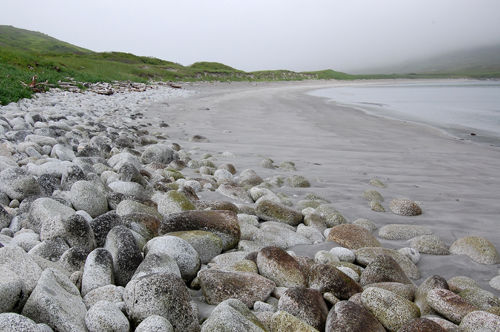 After a couple of days we made for the landlocked Flying Eagle Harbor on Big Koniuji Island. Another sand beach, excellent shelter, and fine kayaking.
We were still close enough to Sandpoint to receive their Public Radio station, with great jazz and 70’s music programs. Sandpoint, Dillingham (in Bristol Bay) and Homer all have good radio stations available through AM radio, and are also receivable over our HF-SSB radio. An HF-SSB radio is becoming ancient technology and fewer boats are bothering to have one installed. But we have found them a source of great entertainment on many longer crossings, an example being listening to AFN (Armed Forces Network) while crossing to Hawaii and getting the 2008 election results in real time. In addition, there value for emergency communications remains undiminished.
After a couple of days we made for the landlocked Flying Eagle Harbor on Big Koniuji Island. Another sand beach, excellent shelter, and fine kayaking.
We were still close enough to Sandpoint to receive their Public Radio station, with great jazz and 70’s music programs. Sandpoint, Dillingham (in Bristol Bay) and Homer all have good radio stations available through AM radio, and are also receivable over our HF-SSB radio. An HF-SSB radio is becoming ancient technology and fewer boats are bothering to have one installed. But we have found them a source of great entertainment on many longer crossings, an example being listening to AFN (Armed Forces Network) while crossing to Hawaii and getting the 2008 election results in real time. In addition, there value for emergency communications remains undiminished.
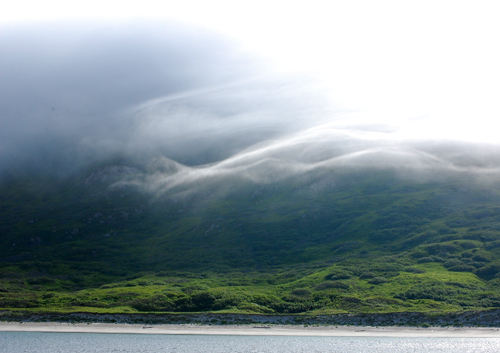 The weather seemed to be improving and as we left the Outer Shumigans we had a rare clear view of the volcanic peaks of the Alaska Peninsula. There had been lots of discussion as to our next destination but it’s usually the wind direction that dictates the final decision. In past trips along the Peninsula we had used Port Wrangell, a landlocked harbor first surveyed by Russian Lt. Vasilev in 1832, and named for the Russian Governor of the time. So on this passage we decided to try something new, and continued a few mile east to the bay of Agrapina.
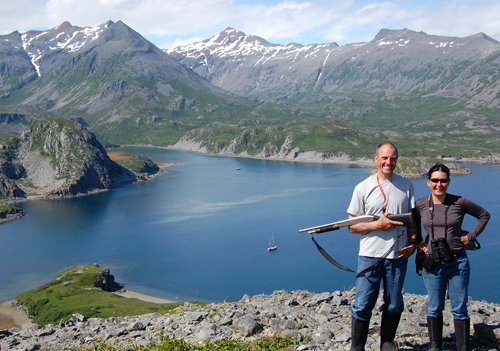
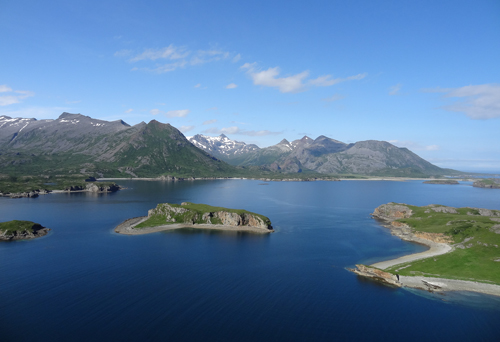 On each voyage there is one stop that stands out, and Agrapina was to be this summer’s highlight. The first morning we woke up to beautiful blue skies and warm weather. The dinghy was launched and we hit the beach, shotgun in hand, to explore. The Alaska Peninsula is known for it’s large population of enormous brown bears and there were signs of their presence everywhere. At one point Mark had stopped on a narrow ridge while Nancy continued up the cliff trying to get a better view of the area. Suddenly Mark called out “bear”!!! Actually there were two bears - the sound of Mark’s voice scarred off one , and the other continued his foraging for food. We were not in any immediate danger, but their size, and the speed with which they can move puts one on immediate alert, especially since we were not together.
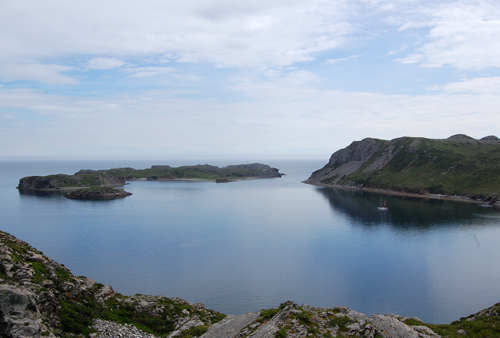 The next morning was another beautiful day and as Nancy was enjoying the scenery she noticed that there was another sailboat anchored nearby. We hopped into the dinghy to introduce ourselves and learn where they had been and where they were headed. Burt and Christine were aboard their Canadian boat, Seaburban, and they were headed East after cruising as far as False Pass. Their arrival was a real bonus for Nancy, as she now had hiking partners - the only requirement was that Burt had to carry, and use if necessary, the shotgun. The Canadians hadn’t seen any bears and it was exciting for them when we spotted a mother bear and three cubs, a healthy distance away. Even at a distance one gets a real sense of the size of these bears, the mother bear from the rear looking like a VW.
 All good things must end and during the fourth night of our stay the winds picked up from the northwest, creating the beginning of willawaws, strong blasts of katabatic winds down from the mountains. Both boat's crews decided the next day to continue on, Seaburban to Geographic Harbor, and Tamara to Kodiak Island. We were in radio contact, and about 3 hours down the line we got a call from Seaburban who was experiencing 30 - 40 knot winds out of Wide Bay. Mark had warned them about the bad williwaws the Peninsula is famous for in northwest winds, and with north west winds forecast for the next couple of days they decided to change course and also head for Kodiak Island.
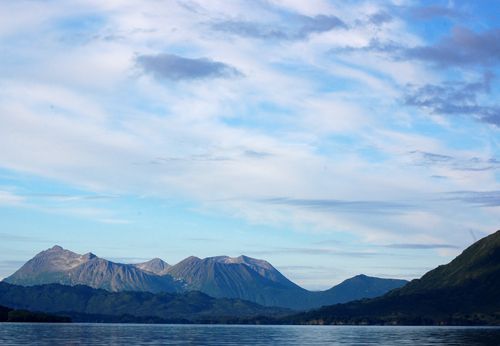 After a night of strong following winds, we made our way to the Head of Larson Bay, with its picturesque old salmon cannery.
We try to keep our stays in Kodiak City as short as possible, due to the harbor fees. So once again we moved to one of our favorite anchorages on Long Island, a few miles from town to await favorable conditions to proceed. Previous posts have shown the WWII gun emplacements and other relics scattered about the island.
While awaiting weather to cross the Gulf of Alaska, we took the opportunity to visit Kitoi Bay on Afognak Island, then re-visit Seal Bay on the north side of the island. This would shorten our run across the Gulf back to Prince William Sound.
After a night of strong following winds, we made our way to the Head of Larson Bay, with its picturesque old salmon cannery.
We try to keep our stays in Kodiak City as short as possible, due to the harbor fees. So once again we moved to one of our favorite anchorages on Long Island, a few miles from town to await favorable conditions to proceed. Previous posts have shown the WWII gun emplacements and other relics scattered about the island.
While awaiting weather to cross the Gulf of Alaska, we took the opportunity to visit Kitoi Bay on Afognak Island, then re-visit Seal Bay on the north side of the island. This would shorten our run across the Gulf back to Prince William Sound.
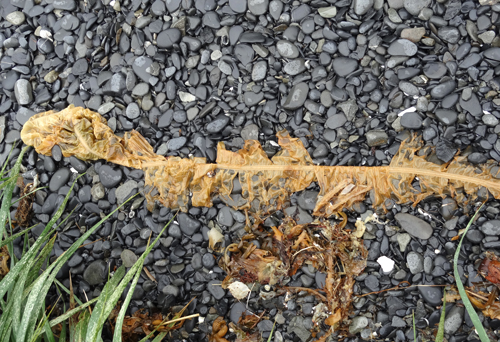 As we approached Cape Clear and the entrance to Prince William Sound, Nancy spotted a catamaran ahead of us - Rum Doxy - Annette and Mike Reed, whom we had met while in Kodiak Harbor. After five years in SE Asia, they were headed back to their home in Santa Barbara. On their passage from Japan to Puget Sound, the Pacific High had forced them further north than planned and they found themselves in Kodiak. Not expecting to be in Alaska, their wardrobe consisted of mostly warm weather clothing,. They enjoyed a week of warm sunny weather upon arrival but wisely spent time shopping for clothing more appropriate for wet and cold weather.
The Reeds had hoped to visit Glacier Bay National Park in Southeast Alaska, to view glaciers, but when they couldn’t get a permit, Mark convinced them to give Prince William Sound a look. Prince William Sound has more spectacular glaciers accessible from the sea then does the park, and he assured them that the Sound would offer them a spectacular cruise.
As we approached Cape Clear and the entrance to Prince William Sound, Nancy spotted a catamaran ahead of us - Rum Doxy - Annette and Mike Reed, whom we had met while in Kodiak Harbor. After five years in SE Asia, they were headed back to their home in Santa Barbara. On their passage from Japan to Puget Sound, the Pacific High had forced them further north than planned and they found themselves in Kodiak. Not expecting to be in Alaska, their wardrobe consisted of mostly warm weather clothing,. They enjoyed a week of warm sunny weather upon arrival but wisely spent time shopping for clothing more appropriate for wet and cold weather.
The Reeds had hoped to visit Glacier Bay National Park in Southeast Alaska, to view glaciers, but when they couldn’t get a permit, Mark convinced them to give Prince William Sound a look. Prince William Sound has more spectacular glaciers accessible from the sea then does the park, and he assured them that the Sound would offer them a spectacular cruise.
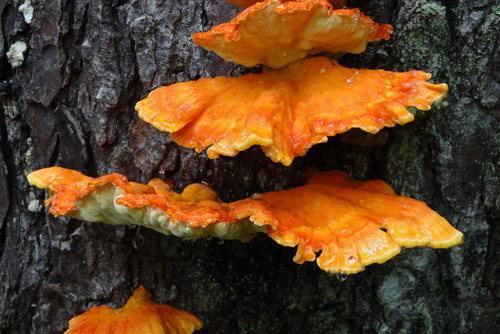 Prince William Sound had experienced an exceptionally beautiful summer, but with the beginning of August the weather had taken a turn for the worse. The next twoweeks were more rain than sun. Even with a rainy forecast though, there were many days with a few hours of no rain, allowing for exploring the anchorages by kayak or dinghy. We examined a number of new anchorages, as well as revisited some of our favorite tried and true anchorages.
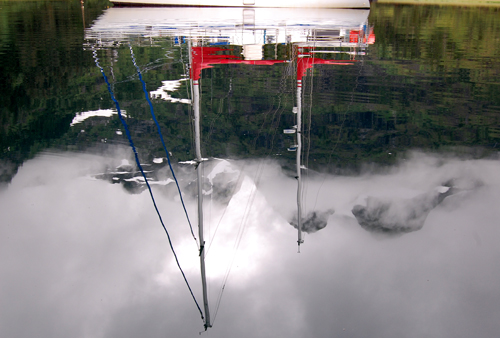 By late August we were back in our slip in Cordova, a little earlier than most seasons. Nancy left on August 26th to hike her next section of the Pacific Crest Trail. This effort would take her 185 miles from Ashland to Willamette Bay in southern Oregon. You can view her current hiking experience by clicking on the link on the right.